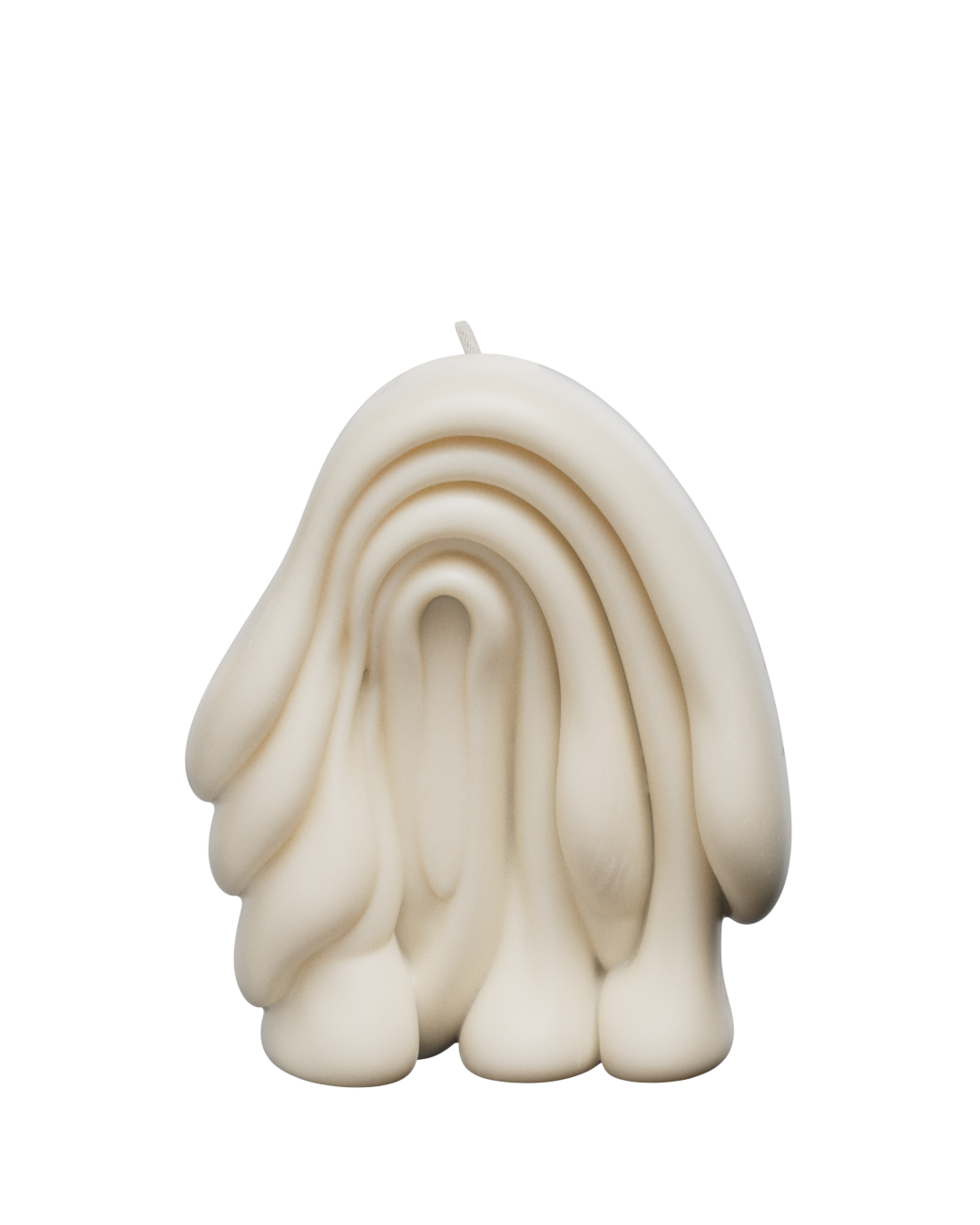
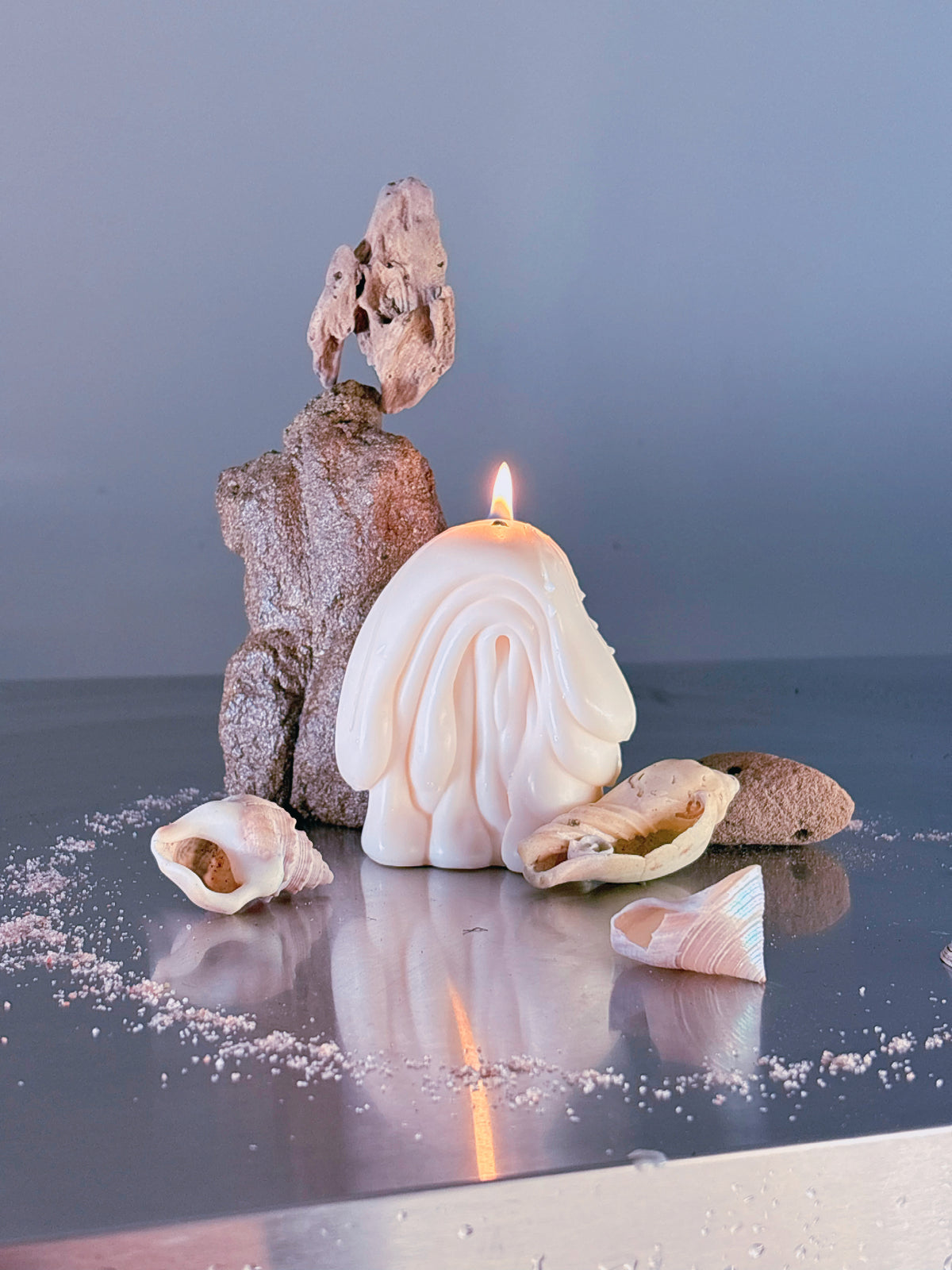
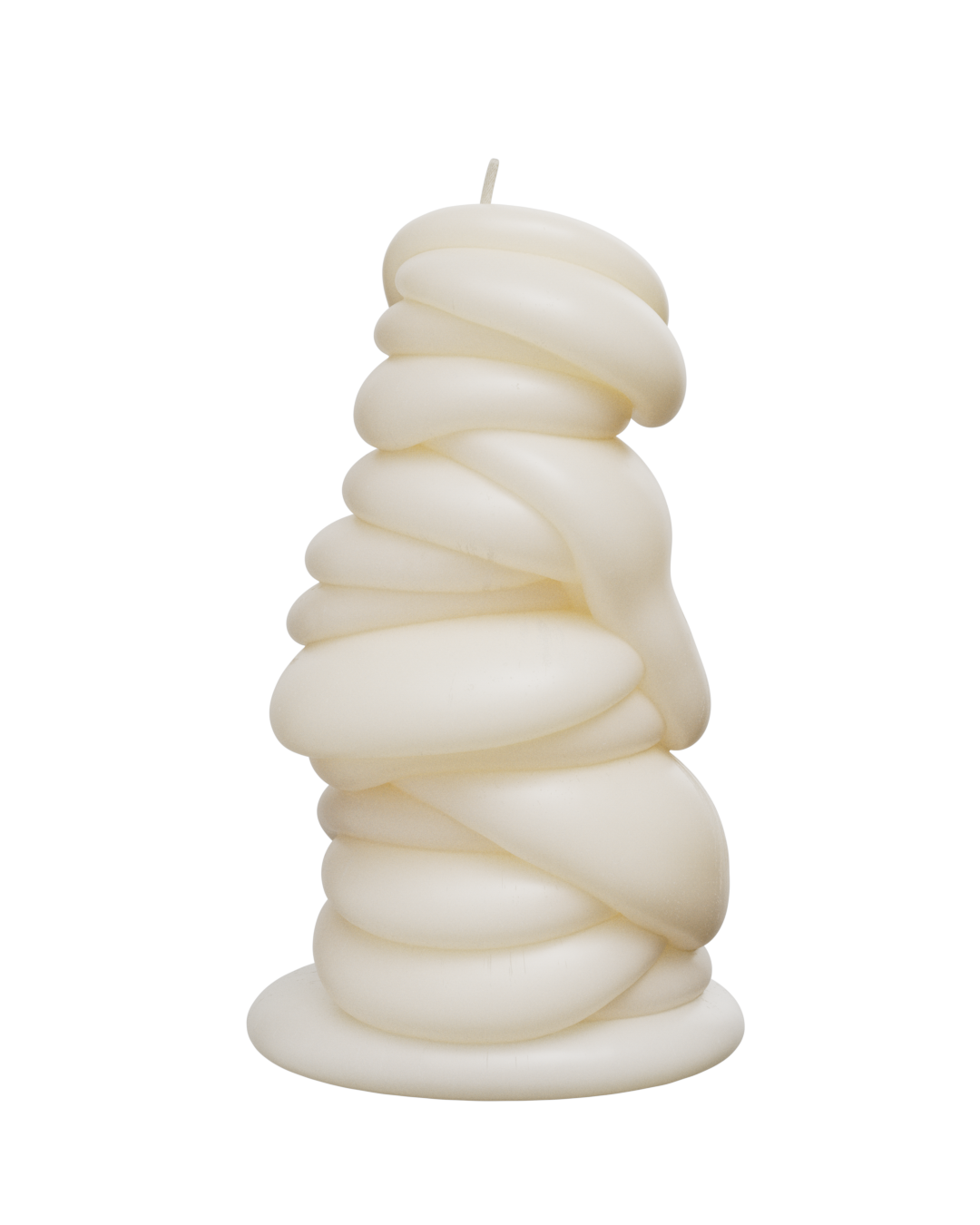
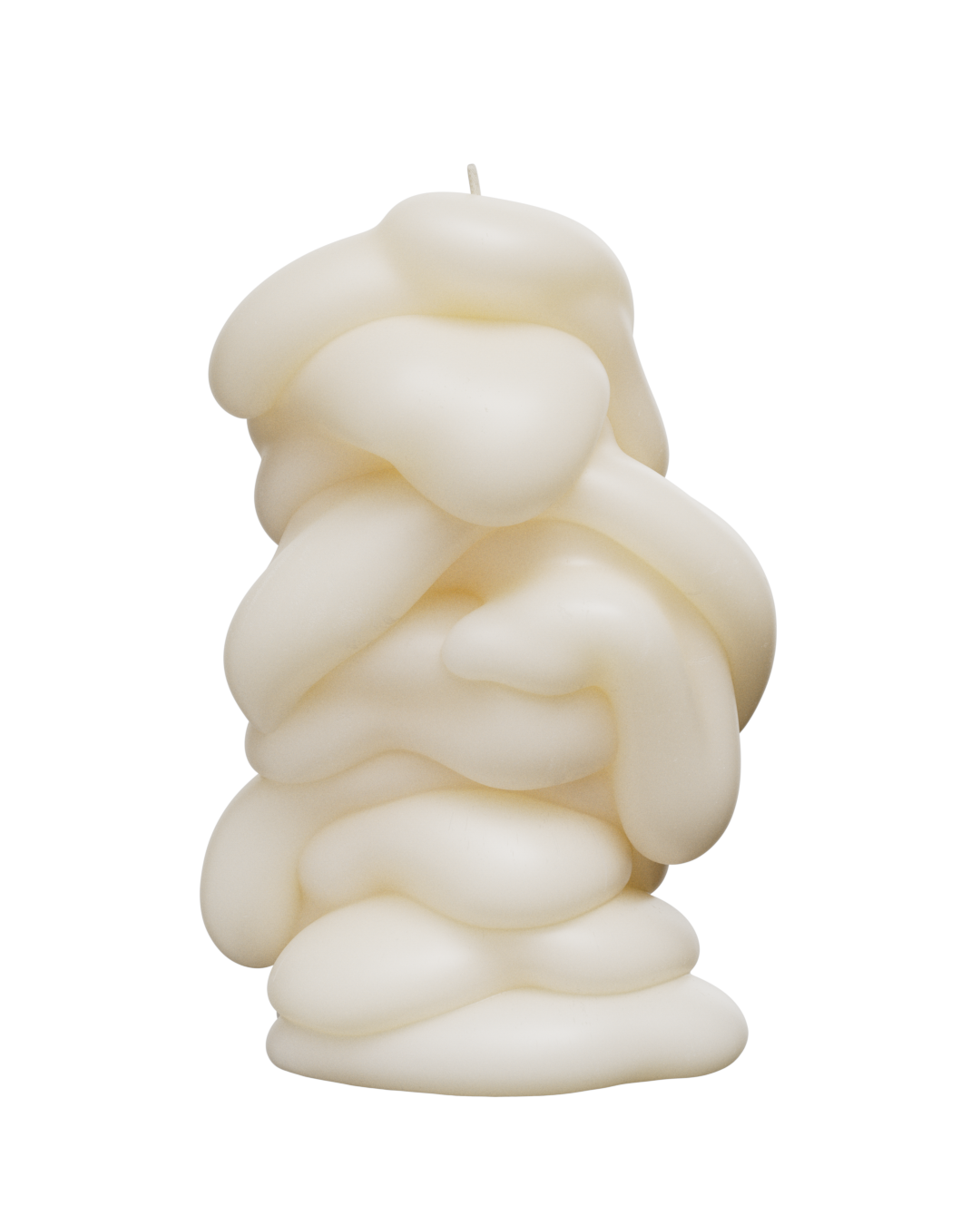
Post Objects is a sculptural candle studio in Titirangi, on the western edge of Auckland, New Zealand. It was founded by Liz Wycherley and Simon Oosterdijk, whose first body of work, the Flow series, grew out of fluid simulations the two developed together. Liz, a ceramicist and former womenswear designer, now leads the studio.
Each form is cast by hand in wax and released in small editions, in series of three.
The studio has made work for SSENSE, Completedworks and Monument Gallery, London, whose opening was featured in Wallpaper* and Vogue.
Press, stockist and commission enquiries: info@postobjects.com
For Liz’s ceramics, visit lizwycherley.com
Liz Wycherley on her process
Something in me is utterly compelled by the squish of a balloon, the ripped edge of clay I’ve sliced with a knife, the charred edge of wood I’ve set alight. I’m drawn to any process where the material takes its own path and I become more of an observer. It’s the pull a child feels with playdough: the urge to push the button, crack the egg, pop the bubble.
I’m never fully in control, and that’s the point. The material makes it clear what it wants to do; my preschoolers understand this better than anyone. Working this way takes me out of the equation and leaves something else open. You can see it in the forms: the energy of the material, still alive.
For me it’s almost a compulsion. I get so much enjoyment from doing the sorts of things with material that I know toddlers like doing. It’s about channelling that desire to push buttons, squish things and rip things. Every human has that in them. This work is about those joyful, magnetic feelings. It is about satisfaction.
I’m doing these experiments for the sheer joy, and I hope that feeling translates to others from looking at the forms. There’s a lightness in the way they’re made, and I love that about them. I like to think of them as little beacons on your shelf, encouraging you to follow your strange creative impulse.
I chose wax deliberately, for its ability to change again once it’s lit. Lighting a form releases it into a second process, one that can be just as captivating as the first. I also love that it can disappear.
I’ve always been obsessed with casting multiples and replication. It brings me real happiness to know that the forms I feel so compelled by can be with other people too, not just held by one person, me.

That said, I know people who have kept theirs unlit for nearly ten years. When one is lit, it has a cathartic quality (what’s more cathartic than setting something alight?) and a sensory decadence that feels scarce at the moment.
Each form is named for the energy it radiates to me, but that’s subjective. They’re three-dimensional Rorschach tests. I’ve watched people stand at the studio shelves for over an hour, unable to decide which one feels right. The names are just a way in.
I love the idea of friends sending them to one another, as trophies or totems, when they know someone is going through it.
That is what this work is about: following desire and satisfaction in materials, and letting people feel and share that energy, whether they keep a form as it is or set it back in motion.
Liz Wycherley